Your garage. For many of us, it’s more than just a place to park the car. It’s a workshop, a hobby zone, a storage area, or maybe even your home gym. But when winter hits, that uninsulated 2-car garage quickly turns into an icebox. Trying to wrench on your car, finish a woodworking project, or even just grab something from storage becomes an exercise in frostbite.
You want warmth, convenience, and efficiency. An electric garage heater sounds like the perfect solution. But if your garage isn’t insulated, you can’t just pick any heater and expect miracles. You need a specific strategy, the right kind of heater, and a clear understanding of what you’re up against. We’re going to break down everything you need to know to find the best electric garage heater for your uninsulated 2-car garage, transforming it into a comfortable, usable space, even in the coldest months.
This isn’t about generic advice; we’re diving deep into the unique challenges of uninsulated spaces and how the right electric heater can tackle them head-on.
Structure Map
- Heating an Uninsulated 2-Car Garage: The Real Challenge
- Calculating Your Heating Needs: How Many BTUs and Watts for an Uninsulated Space?
- Infrared vs. Convection: Which Heater Type Wins for Uninsulated Garages?
- Your Electrical Setup: What You Need to Know Before You Buy
- Smart Strategies to Slash Your Garage Heating Costs
- DIY Heat Retention: Simple Tricks to Keep Warm Air Inside
- Noise, Air Quality, and User Comfort: Beyond Just Heat
- Choosing the Best Electric Garage Heater for Your Uninsulated Space
- Installation and Safety: Getting Your Heater Up and Running Right
- Frequently Asked Questions
- Wrapping Up
Heating an Uninsulated 2-Car Garage: The Real Challenge
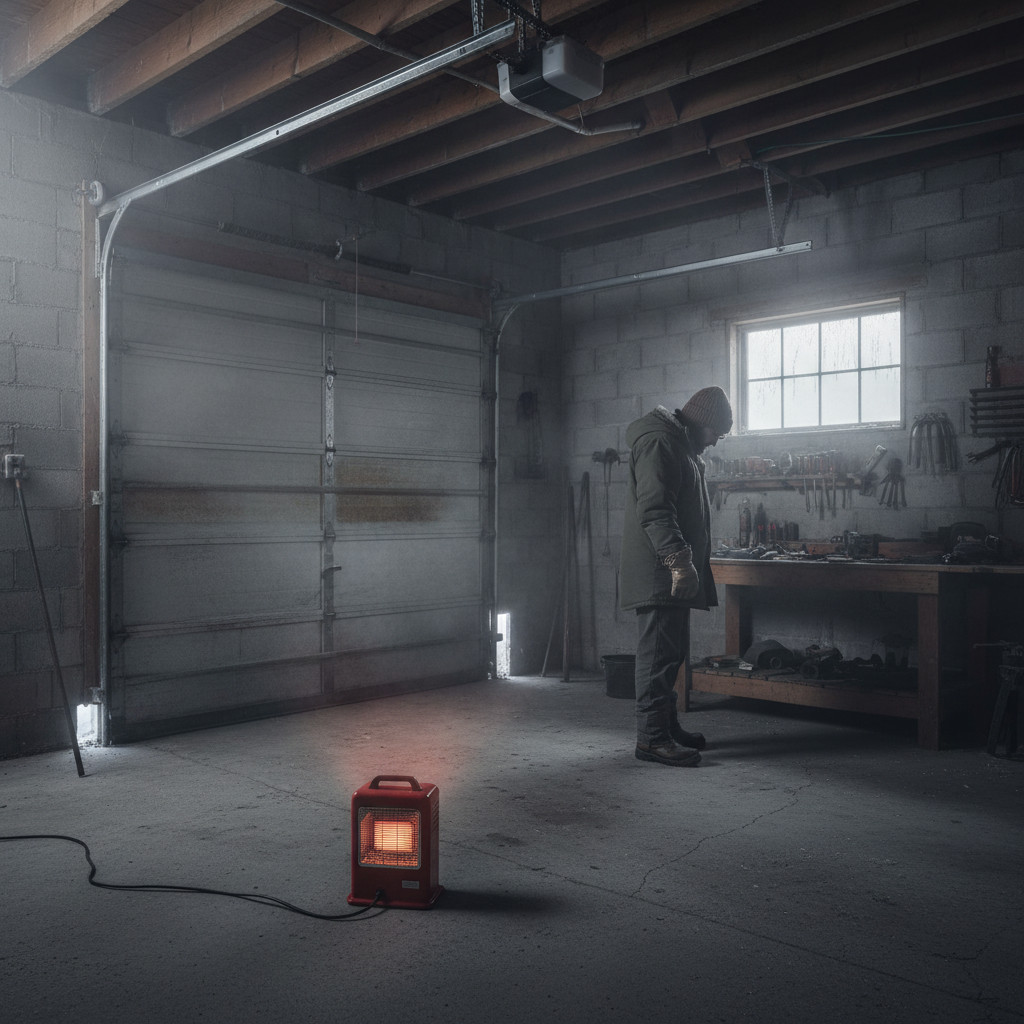
Let’s be honest. An uninsulated garage is a giant thermal sieve. Heat escapes through walls, the ceiling, and especially that big garage door, almost as fast as you can generate it. This isn’t like heating a well-sealed room in your house. Here, you’re fighting a constant battle against heat loss.
Think of it like trying to fill a bucket with water when it has a bunch of holes. You need a powerful hose, and you probably need to plug some of those holes, even temporarily, to stand a chance. That’s why simply cranking up a small space heater won’t cut it. It’s also why you need a strategic approach to both heating and heat retention in an uninsulated 2-car garage.
Calculating Your Heating Needs: How Many BTUs and Watts for an Uninsulated Space?
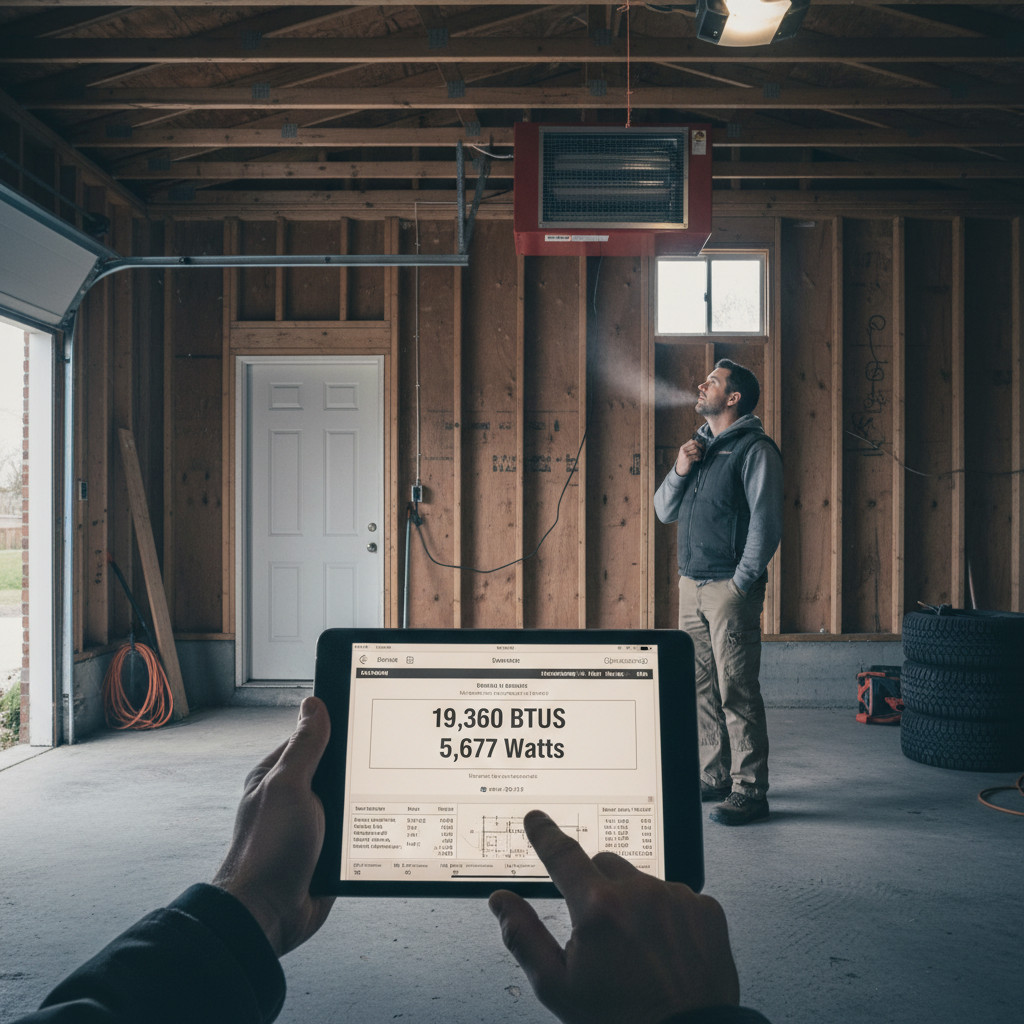
This is where many people go wrong. Standard BTU (British Thermal Unit) calculators usually assume at least some level of insulation. For your uninsulated 2-car garage, you need to throw those numbers out the window and adjust significantly upwards.
What is a 2-Car Garage, Really?
A typical 2-car garage measures roughly 20×20 feet to 24×24 feet. Let’s assume an average size of 22×22 feet (484 square feet) with a 9-foot ceiling. That gives you a volume of approximately 4,356 cubic feet.
The Uninsulated Multiplier
For a well-insulated space, you might need 10-20 BTUs per square foot. For an uninsulated garage, especially in colder climates, that requirement can easily double or even triple. You’re losing heat through every surface, every crack, and every time that big door opens.
We’re generally looking at 30-50 BTUs per square foot, minimum. If you live somewhere with brutally cold winters (think sub-zero temperatures) or if your garage door is frequently opened, you might even push towards 60 BTUs per square foot.
Let’s do the math for our average 22×22 foot (484 sq ft) garage:
- Minimum (Mild Winter/Occasional Use): 484 sq ft * 30 BTUs/sq ft = 14,520 BTUs
- Moderate (Typical Cold Winter/Regular Use): 484 sq ft * 40 BTUs/sq ft = 19,360 BTUs
- Maximum (Very Cold Winter/Heavy Use): 484 sq ft * 50 BTUs/sq ft = 24,200 BTUs
Converting BTUs to Watts
Electric heaters are rated in watts. Here’s the simple conversion: 1 Watt = 3.41 BTUs.
So, to find the wattage you need:
- Minimum: 14,520 BTUs / 3.41 = ~4,260 Watts (4.26 kW)
- Moderate: 19,360 BTUs / 3.41 = ~5,677 Watts (5.68 kW)
- Maximum: 24,200 BTUs / 3.41 = ~7,096 Watts (7.1 kW)
As you can see, we’re talking about serious wattage here. A standard 1500-watt plug-in space heater just won’t cut it for a whole 2-car uninsulated garage. You’ll likely need a heater in the 5,000 to 10,000-watt range to make a real difference, especially if you want to bring the temperature up significantly from freezing. This is a crucial step in choosing the best electric garage heater for uninsulated 2-car garage spaces.
Infrared vs. Convection: Which Heater Type Wins for Uninsulated Garages?
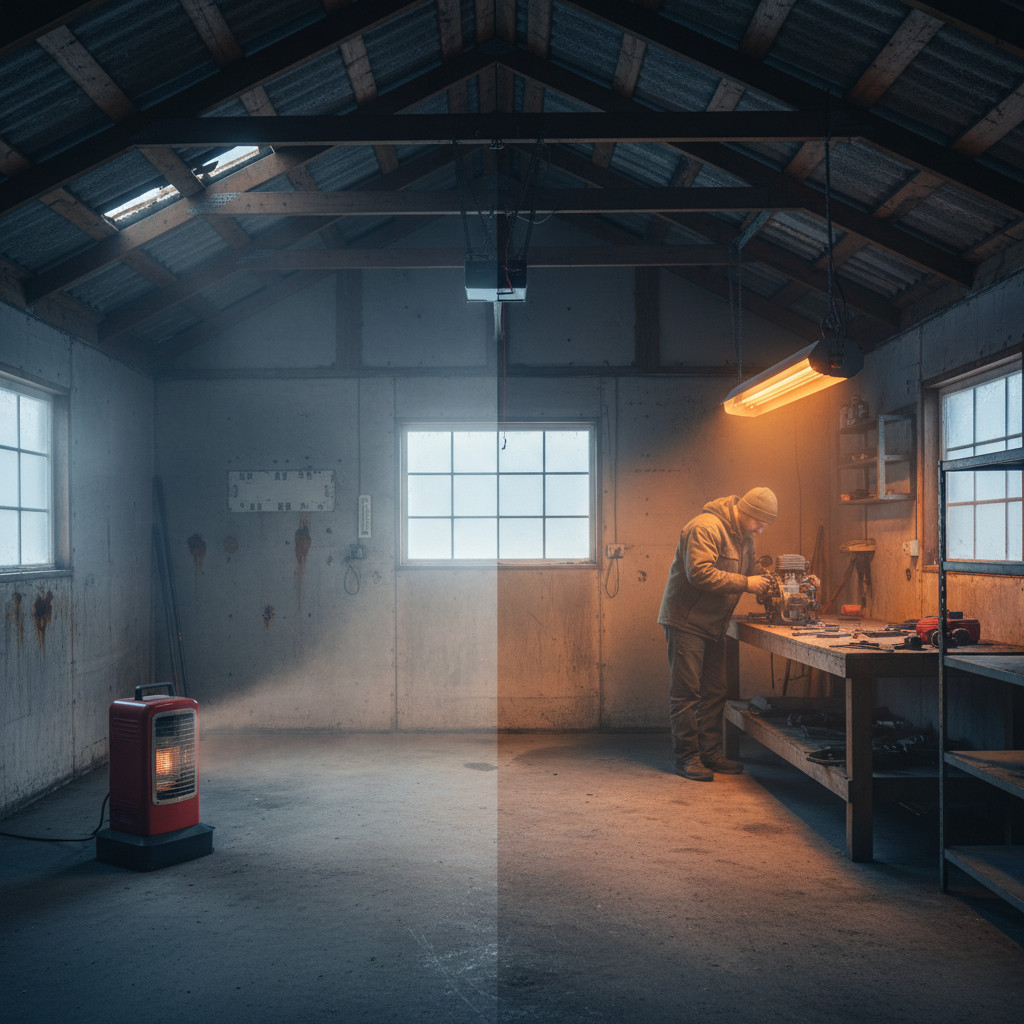
This is a critical distinction for uninsulated spaces. Each type has its strengths, but one often stands out for garages that struggle to hold heat.
Convection Heaters (Forced Air)
Convection heaters work by warming the air. They often have a fan that blows air over a heating element, distributing the warm air throughout the space. Think of your home furnace, but on a smaller scale.
- How they work: They aim to raise the ambient air temperature. The fan helps circulate this warmed air.
- Pros: Can heat an entire space if powerful enough. Good for overall ambient warmth.
- Cons for Uninsulated Garages: Warm air rises and escapes quickly through uninsulated walls, ceilings, and gaps. You’re constantly heating air that’s leaking out. This makes them less efficient and more expensive to run in a leaky space. They also take longer to heat up the entire volume of air.
Infrared Heaters (Radiant Heat)
Infrared heaters are different. Instead of heating the air, they emit electromagnetic waves (like sunlight) that directly warm objects and people in their path.
- How they work: The infrared waves penetrate surfaces and warm them directly. You feel the warmth instantly when you step in front of one.
- Pros for Uninsulated Garages:
- Direct Heating: They heat you and your tools directly, not the air. This means you feel warm even if the ambient air temperature isn’t high.
- Less Affected by Drafts: Since they don’t rely on heating air, drafts and poor insulation have less impact on your comfort. The heat goes where it’s pointed.
- Instant Warmth: You don’t have to wait for the entire garage to warm up. Step into the radiant zone, and you’re warm.
- Zone Heating: Perfect for keeping a specific workstation comfortable without trying to heat the whole cavernous space.
- Cons: They don’t heat the ambient air as effectively, so parts of the garage not in the direct line of sight will remain colder. If you need to raise the overall temperature of everything (e.g., for paint to cure), they might not be enough on their own.
The Verdict for Uninsulated Garages
For most users in an uninsulated 2-car garage, infrared heaters are often the superior choice, especially for tasks where you’re stationary. If you’re working at a bench, a powerful overhead infrared heater can keep you toasty warm without trying to heat every cubic foot of escaping air.
However, if you need to raise the ambient temperature for a specific purpose (like letting paint dry, or if you’re constantly moving around the entire garage), a powerful forced-air convection heater might be necessary, perhaps in combination with some temporary insulation strategies. Just be prepared for higher operating costs. Many effective garage heaters combine both radiant and convection elements for a balanced approach, helping you find the best electric garage heater for your specific needs.
Your Electrical Setup: What You Need to Know Before You Buy
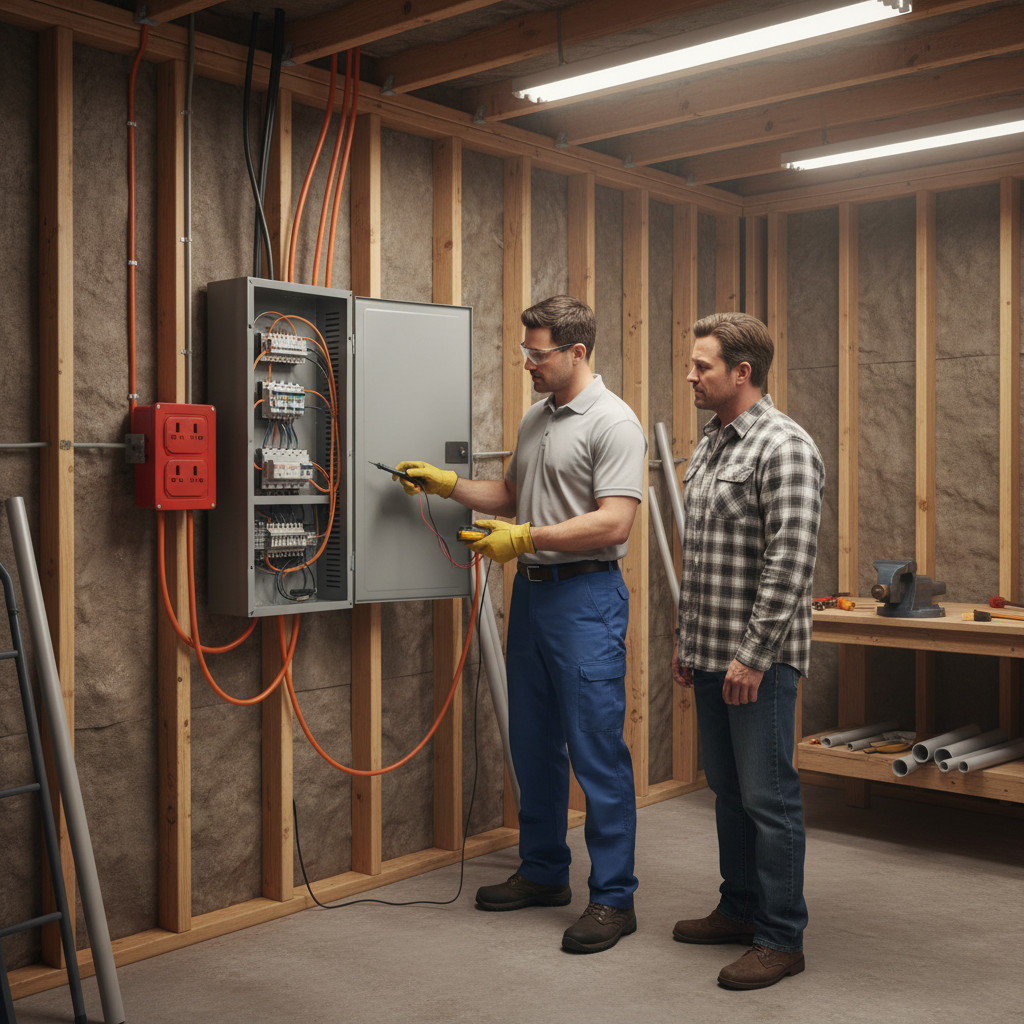
Remember those wattage calculations? We were looking at 4,000 to 7,000+ watts. This is crucial because your standard 120V household outlets probably won’t cut it.
The 120V vs. 240V Divide
- 120V Heaters: Most small portable space heaters run on 120V and draw 1500 watts (the maximum for a standard residential circuit). As we discussed, 1500 watts (approx. 5,100 BTUs) is generally insufficient for an uninsulated 2-car garage. You might use one for a tiny corner, but not the whole space.
- 240V Heaters: This is where the real heating power comes in. Heaters in the 3,000-watt to 10,000-watt range almost always require a 240V circuit. This is the same voltage used for your electric dryer or oven.
Dedicated Circuits are a Must
Regardless of whether you choose 120V (for a very small area) or 240V, your electric garage heater needs a dedicated circuit. This means the heater is the only thing drawing power from that breaker.
- Why? High-wattage appliances pull a lot of current (amperage). Sharing a circuit with lights, power tools, or other outlets will quickly trip your breaker, or worse, create a fire hazard.
What Does This Mean for You?
If your garage doesn’t already have a 240V outlet on a dedicated circuit, you’ll almost certainly need an electrician. This isn’t a DIY job for most homeowners. An electrician can assess your current electrical panel, determine if it has the capacity, and install the necessary wiring, breaker, and outlet.
Don’t skip this step. Trying to run a powerful heater on inadequate wiring is dangerous and can damage your electrical system. Factor in the cost of professional electrical installation when budgeting for your heater. It’s often a significant part of the overall investment in getting the best electric garage heater for your setup.
Smart Strategies to Slash Your Garage Heating Costs
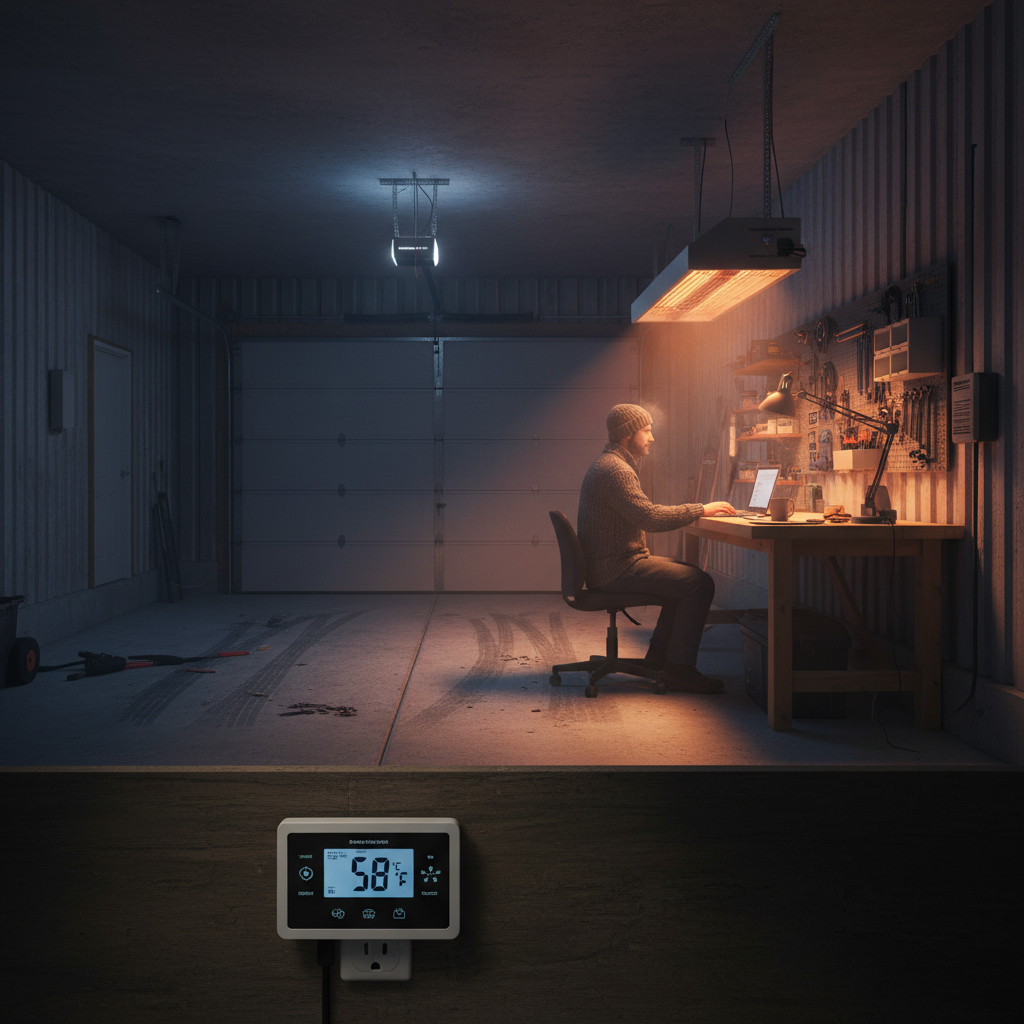
Heating an uninsulated space is inherently more expensive. There’s no way around that. But you can manage those costs with smart strategies.
Realistic Operating Cost Expectations
Let’s use our moderate example: a 5,680-watt (5.68 kW) heater.
If your electricity costs $0.15 per kilowatt-hour (kWh), running this heater for one hour would cost:
5.68 kW * $0.15/kWh = $0.85 per hour.
If you run it for 4 hours a day, 5 days a week, that’s $17 per week, or roughly $68 per month. In a very cold month where you use it more often or for longer durations, this can easily climb to $100-$200 or more. This isn’t meant to scare you, but to set realistic expectations for running the best electric garage heater for uninsulated 2-car garage spaces.
Strategies to Minimize Costs:
- Zone Heating: This is perhaps the most impactful strategy for uninsulated garages. Instead of trying to heat the entire 2-car space, focus your heat on where you’re actually working. An infrared heater mounted above your workbench is a perfect example. Why pay to heat the empty space where your second car is parked?
- Thermostat Management:
- Programmable Thermostats: If your heater has one, use it. Set it to warm up the garage just before you plan to use it, and turn down when you leave.
- Don’t Overheat: Aim for comfort, not tropical heat. 55-60°F might be perfectly comfortable for working in a garage, especially if you’re active. Every degree higher costs you money.
- Turn it Off: When you’re done, turn the heater off. There’s no point in maintaining a warm temperature in an uninsulated space when nobody’s in it – the heat will just leak out quickly anyway.
- Combine with Insulation Efforts: Even temporary, DIY insulation makes a huge difference. The less heat that escapes, the less your heater has to work, and the less money you spend. We’ll cover this next.
- Use it Strategically: If you’re just grabbing something quickly, bundle up. Save the heater for longer projects where comfort is truly necessary.
- Look for Energy Efficiency Features: While all electric heaters are 100% efficient at converting electricity to heat, some have better controls, fans, or designs that help distribute heat more effectively without wasting energy. Features like adjustable fan speeds, multiple power settings, and delay timers can help fine-tune usage.
DIY Heat Retention: Simple Tricks to Keep Warm Air Inside
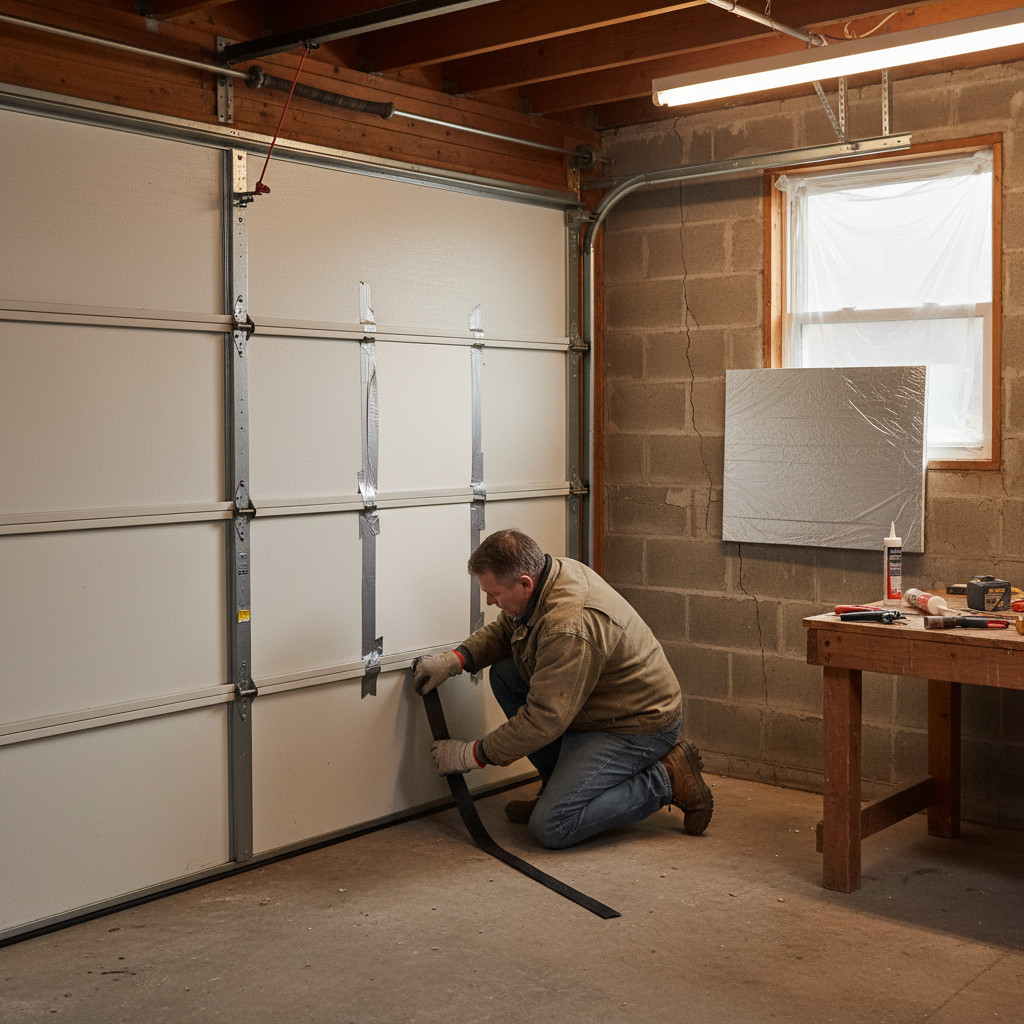
An uninsulated garage is like a leaky boat. Before you spend a fortune on a bigger engine (heater), try to patch some holes. These low-cost, temporary strategies won’t magically turn your garage into a cozy living room, but they will drastically improve the effectiveness and efficiency of your heater.
1. Seal Up the Garage Door
This is your biggest heat loss culprit.
- Weatherstripping: Check the bottom seal of your garage door. Is it old, cracked, or missing? Replace it with a new rubber or vinyl seal. You can buy these in rolls at any hardware store.
- Side and Top Seals: Add weatherstripping along the sides and top of the garage door frame. Even a small gap lets out a lot of heat.
- Insulation Kits (Temporary): You can buy inexpensive foam board or reflective foil insulation kits specifically designed for garage doors. These are easy to cut and attach directly to the inside panels of your door. It’s not perfect, but it’s a huge step up from bare metal or wood.
2. Mind the Windows
If your garage has windows, they’re probably single-pane and offer zero insulation.
- Window Film Kits: Inexpensive plastic film kits you apply to the inside of the window can create a temporary insulating layer.
- Cover Them Up: For maximum effect, cover windows with rigid foam insulation boards (cut to fit) or even heavy blankets and tarps while you’re heating the space.
3. Attack Wall Cracks and Gaps
Look for any visible cracks or gaps where your walls meet the foundation, around utility penetrations (pipes, wires), or even between wall panels.
- Caulk and Foam: Use exterior-grade caulk for small cracks. For larger gaps, expanding spray foam is your friend. It’s amazing how much air can sneak through seemingly small openings.
4. Block Off Unused Areas (Zone Off)
If you’re only working in one corner of your 2-car garage, consider temporarily sectioning off that area.
- Heavy Tarps or Plastic Sheeting: Hang heavy tarps or thick plastic sheeting from the ceiling to create a smaller, more manageable “room within a room.” This is especially effective if your heater is focused on that zone.
- Portable Walls: For a slightly more permanent but still temporary solution, you can construct simple frames with PVC pipe and attach clear plastic sheeting.
5. Consider the Ceiling (If Accessible)
If you have an unfinished ceiling with exposed joists, this is another major heat escape route.
- Roll-Out Insulation: Laying inexpensive roll-out fiberglass or mineral wool insulation directly onto the ceiling joists can dramatically reduce heat loss upwards. Even a thin layer will help. Wear protective gear (mask, gloves, long sleeves) if you do this.
- Rigid Foam Boards: Cut and fit rigid foam insulation boards between the joists for a cleaner, more effective barrier.
Every little bit helps. These DIY steps won’t cost much, but they’ll make your expensive electric heater work much more effectively, saving you money in the long run.
Noise, Air Quality, and User Comfort: Beyond Just Heat

When you’re choosing a heater for your workshop, it’s not just about BTUs. How it sounds, what it puts into the air, and how comfortable it makes the space are all important factors when selecting the best electric garage heater for your uninsulated 2-car garage.
Noise Levels
- Forced-Air Heaters: These often have powerful fans to circulate warm air. That means noise. If you’re doing detailed work, listening to music, or trying to concentrate, a loud forced-air heater can be a real distraction. The noise level is usually measured in decibels (dB). Look for models that specify lower dB ratings if quiet operation is important to you.
- Infrared Heaters: Generally much quieter. Many are completely silent because they don’t use fans. Some might have a very faint hum from the heating element, but it’s usually negligible. This makes them ideal for tasks requiring focus.
Air Quality
- Electric Heaters (Generally Good): One of the big advantages of electric heaters over combustion heaters (like propane or natural gas) is that they don’t produce exhaust fumes, carbon monoxide, or introduce moisture into the air. This means no need for special ventilation and no concerns about indoor air quality due to combustion byproducts.
- Dust Circulation: Forced-air electric heaters can, however, stir up dust and debris from your garage floor. If you have allergies, respiratory sensitivities, or are working on projects that generate a lot of fine dust (like woodworking), this is something to consider.
- Dry Air: Any form of heating can dry out the air. If you spend long periods in a heated garage, you might notice dry skin or static electricity. A small humidifier can counteract this, if needed.
Other Comfort Factors
- Controls: Look for heaters with clear, easy-to-use controls, preferably with a thermostat. Remote controls are a nice touch for wall or ceiling-mounted units.
- Mounting Options: Many garage heaters are designed to be mounted on walls or ceilings, getting them out of the way and distributing heat more effectively. This is safer too, especially in a busy workshop.
- Safety Features: Automatic shut-off for overheating, tip-over protection (for portable units), and cool-touch housings are essential safety features.
Choosing the Best Electric Garage Heater for Your Uninsulated Space
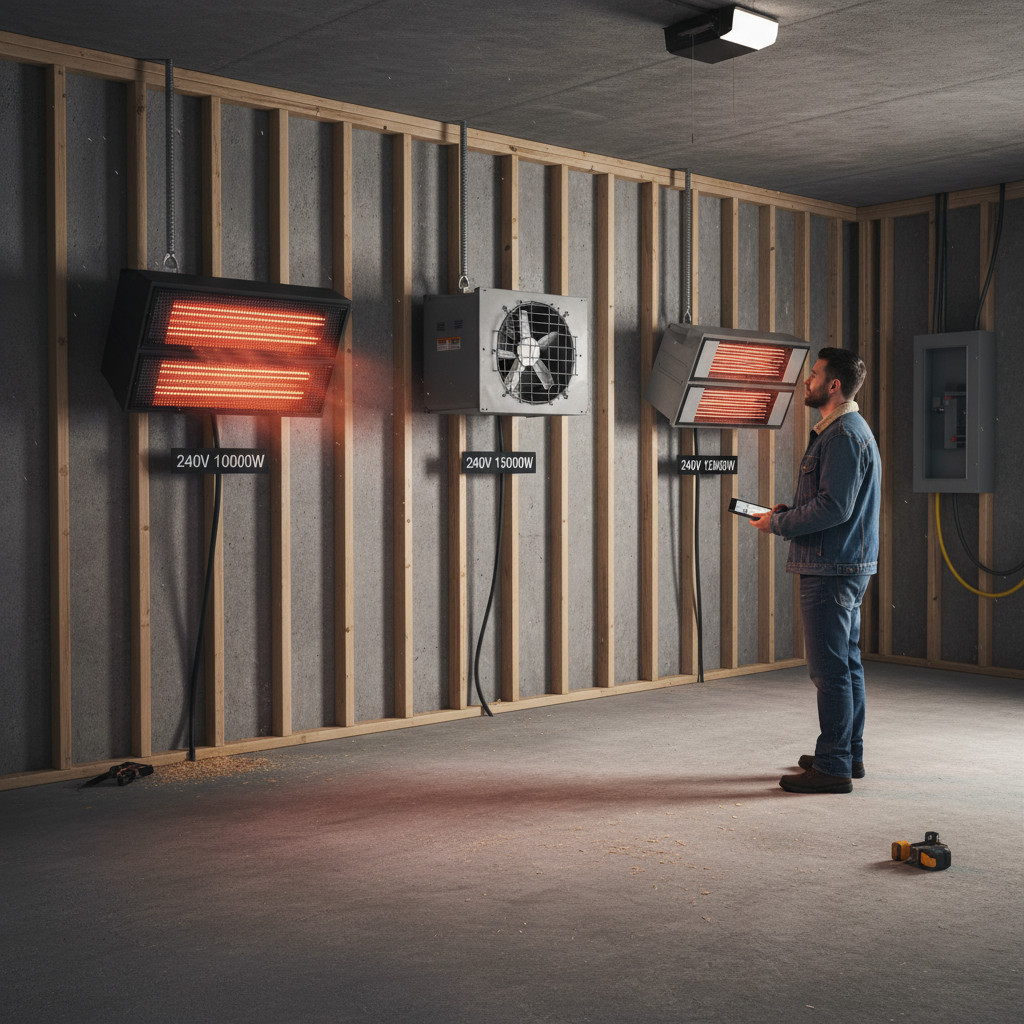
Given the challenges of an uninsulated 2-car garage, here’s what to look for and what types of heaters generally perform best.
Key Features to Prioritize:
- High Wattage (240V): As calculated earlier, you’ll need at least 5,000-7,500 watts, possibly up to 10,000 watts, to truly heat an uninsulated 2-car garage. This means a 240V unit is almost certainly required.
- Thermostat Control: Don’t settle for a simple on/off switch. A built-in thermostat lets you set a desired temperature and allows the heater to cycle on and off, saving energy and maintaining comfort.
- Mounting Options: Wall or ceiling-mounted heaters are often best for garages. They keep the heater safely out of the way, prevent accidental tipping, and allow for better heat distribution (especially for radiant heat, which can be angled).
- Durable Construction: Garages are tough environments. Look for sturdy metal housing, enclosed heating elements, and a design built to withstand dust and occasional bumps.
- Safety Certifications: Always ensure the heater is listed by a recognized testing laboratory like UL, ETL, or CSA.
Top Heater Types for Uninsulated Garages:
1. Wall or Ceiling-Mounted Forced-Air (Convection) Heaters
These are the workhorses for many garages, especially if you need to raise the overall ambient temperature.
- Why they work: High wattage (5,000W to 10,000W+), powerful fans, and often directional louvers to push warm air where you need it.
- Best for: General warming of the entire space, where overall ambient temperature is important (e.g., curing paints, keeping pipes from freezing).
- Considerations: Will be noisy. Can be less efficient in very drafty garages as warm air quickly escapes. Requires professional 240V installation.
2. Wall or Ceiling-Mounted Infrared Radiant Heaters
These are often the secret weapon for uninsulated spaces due to their direct heating capabilities.
- Why they work: They warm objects and people directly, bypassing the need to heat all the escaping air. Instant warmth.
- Best for: Zone heating, keeping a specific workstation comfortable, situations where noise is a concern, or when you need instant warmth.
- Considerations: Won’t raise the overall ambient temperature as much. Areas not in the direct path of the radiant heat will remain cold. Can still require 240V if powerful enough.
3. Combination Radiant/Convection Heaters
Some heaters are designed to offer the best of both worlds, using a heating element that provides both radiant heat and a fan to circulate some warm air.
- Why they work: They offer immediate radiant warmth while also contributing to the overall ambient temperature.
- Best for: A good compromise if you need both direct warmth and some general heating, and want to avoid the extremes of pure convection or pure radiant.
- Considerations: May still be noisy if they have a powerful fan.
Avoid: Small, portable 120V space heaters. They simply don’t have enough power to heat an uninsulated 2-car garage effectively, unless you’re literally putting your hands directly in front of them for a few minutes. To find the best electric garage heater for uninsulated 2-car garage conditions, you need power and purpose-built features.
Installation and Safety: Getting Your Heater Up and Running Right
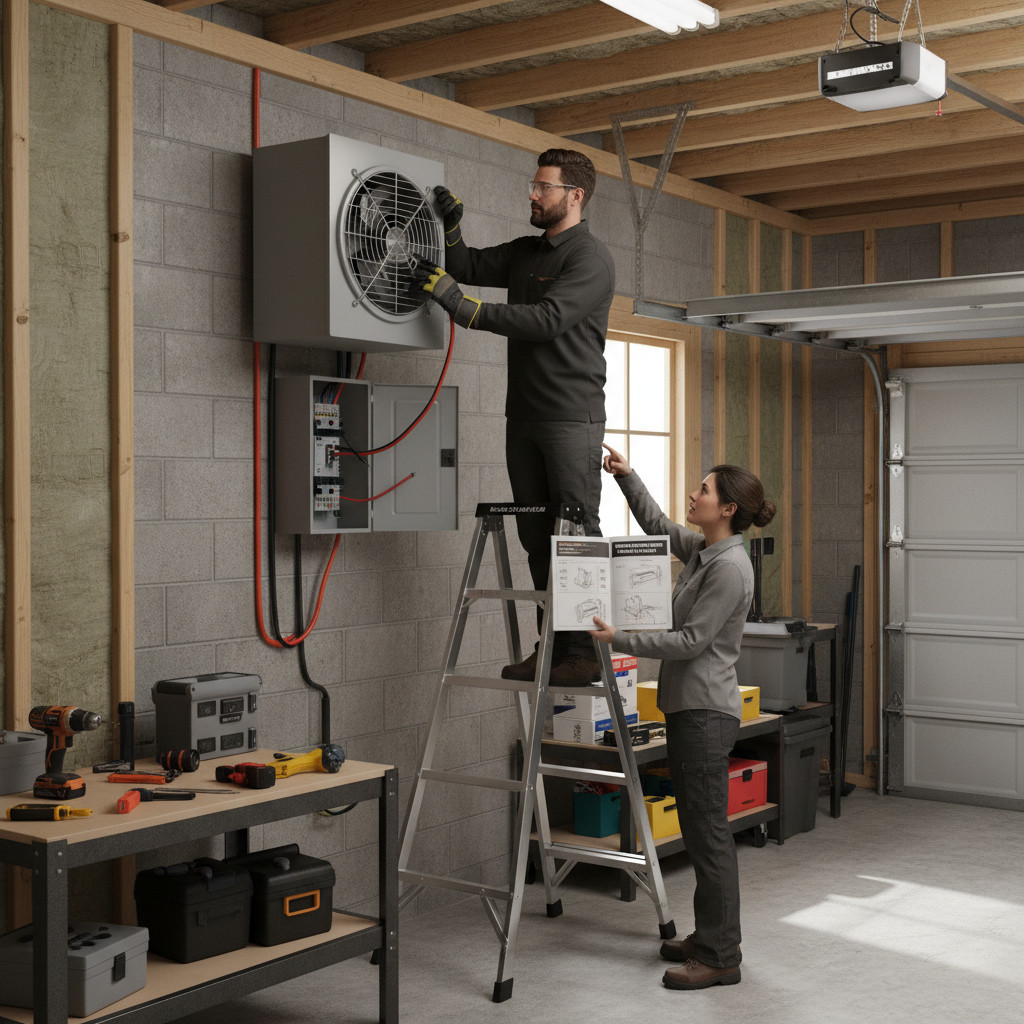
Once you’ve chosen your powerful new electric garage heater, proper installation and adherence to safety guidelines are paramount.
Professional Electrical Installation
- Hire a Licensed Electrician: For any 240V heater or if you’re installing a dedicated 120V circuit, this is non-negotiable. An electrician ensures your wiring is up to code, your panel can handle the load, and the installation is safe.
- Proper Placement of Outlets: Discuss with your electrician where the 240V outlet will be most convenient for your heater’s placement.
Heater Placement
- Follow Manufacturer’s Clearances: Every heater has minimum clearance requirements from walls, ceilings, and combustible materials (wood, insulation, fabrics). Ignoring these is a major fire hazard. Read the manual!
- Optimal Height:
- Ceiling Mounts: Typically mounted 8-10 feet high, angled slightly downwards for best heat distribution. This gets them out of the way.
- Wall Mounts: Usually mounted 6-8 feet high. Ensure it’s not blocked by shelves or equipment.
- Avoid Obstructions: Don’t place furniture, tools, or flammable liquids directly in front of or too close to the heater.
- Zone Heating Focus: If using an infrared heater for zone heating, aim it directly at your primary workspace.
General Safety Tips
- No Extension Cords (Especially for 240V): High-wattage heaters should always be plugged directly into a dedicated wall outlet. Extension cords, especially standard household ones, can overheat and cause fires. If you need more length, have an electrician install a new outlet closer to your desired heater location.
- Regular Cleaning: Dust and debris can build up on heating elements and fans, reducing efficiency and creating a fire risk. Unplug the heater and clean it regularly according to the manufacturer’s instructions.
- Keep Flammables Away: Store gasoline, paints, solvents, and other flammable materials far away from your heater.
- Check for Damage: Periodically inspect the heater’s cord, plug, and housing for any signs of damage. Don’t use a damaged heater.
- Child and Pet Safety: If you have children or pets, ensure the heater is mounted out of reach or has protective grills.
Frequently Asked Questions
Can a 1500-watt electric heater warm an uninsulated 2-car garage?
No, a 1500-watt heater is generally not powerful enough to effectively warm an entire uninsulated 2-car garage. It provides about 5,100 BTUs, which is far below the 15,000-25,000 BTUs typically needed for such a space. You might feel some warmth directly in front of it, but it won’t raise the ambient temperature significantly.
How much will it cost to run a powerful electric garage heater in an uninsulated space?
Running costs for a powerful 5,000-7,500 watt electric heater in an uninsulated garage can range from $0.75 to over $1.00 per hour, depending on your local electricity rates. If used frequently, monthly costs could be $100-$200 or more. Implementing DIY insulation and using zone heating strategies can help manage these expenses significantly.
Is it better to use an electric or propane heater for an uninsulated garage?
Electric heaters are generally safer and better for air quality in a workshop setting because they produce no fumes, carbon monoxide, or moisture. Propane heaters offer more portable, immediate heat but require excellent ventilation to prevent CO buildup, introduce moisture, and can consume oxygen. For regular use and air quality concerns, a properly sized electric heater is often the preferred choice despite the higher upfront electrical costs.
Wrapping Up
Heating an uninsulated 2-car garage presents some unique hurdles, but finding the best electric garage heater for your specific needs is absolutely doable with the right approach. Forget about those small 120V heaters; you’re going to need a powerful, likely 240V unit. For maximum comfort and efficiency in a leaky space, consider an infrared heater for targeted warmth, or a robust forced-air unit if you need to warm the entire area.
Remember to factor in the electrical requirements and potential costs of installation. Most importantly, don’t underestimate the power of simple, DIY insulation efforts. Plugging those holes in your “thermal bucket” will make any heater you choose work harder and cost less to run.
With a smart plan and the right equipment, your uninsulated 2-car garage can transform into a comfortable, productive space all year round.
